Discovering a lump beneath your skin can be worrying, especially when it becomes more noticeable, starts growing, or causes discomfort. One possible cause is a lipoma, a common, non-cancerous growth made up of fatty tissue. Lipomas can develop almost anywhere on the body, including the neck, shoulders, back, arms, thighs, and abdomen. Although most are harmless, some may require medical assessment and surgical removal.
At Dr Cheema, patients can explore professional surgical care with Mr Mubashir Cheema, an internationally trained plastic, reconstructive, and aesthetic surgeon based in Birmingham. This guide explains the signs that warrant medical attention, the reasons for lipoma removal, available treatment options, private surgery costs, and what to expect during recovery.
What Is a Lipoma? Signs of a Fatty Lump Under the Skin
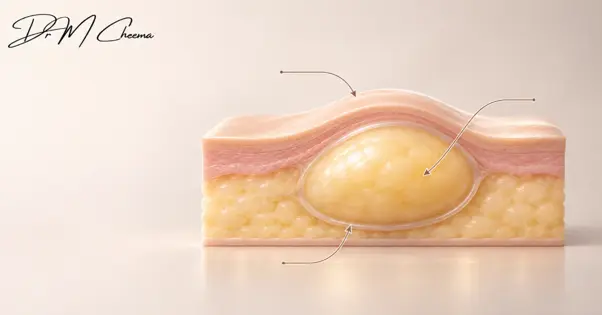
A lipoma is a benign growth composed of mature fat cells that usually develops in the fatty layer just beneath the skin. It is generally slow-growing and may remain unchanged for months or years.
Typical characteristics of a lipoma include:
- A soft or rubbery texture.
- A rounded or oval shape.
- A lump that moves slightly beneath the skin when gently pressed.
- Slow growth over time.
- Little or no pain.
- Normal-looking skin over the lump.
Lipomas commonly develop on the shoulders, back, neck, upper arms, thighs, and torso. Depending on their location, they may become noticeable when wearing certain clothes, exercising, or performing everyday activities.

When Should You Consider Lipoma Removal?
Most lipomas do not require surgery. However, removal may be appropriate when a lump causes physical discomfort, affects movement, becomes increasingly noticeable, or needs further investigation.
The decision should be based on a clinical assessment rather than appearance alone.
1. The Lipoma Is Growing or Changing
Lipomas usually grow slowly, but a noticeable change in size should not be ignored. A lump that increases in size, particularly over a short period, requires medical assessment.
2. The Lipoma Is Painful or Uncomfortable
Although most lipomas are painless, some can cause discomfort when they press against nearby nerves or other structures. Larger growths may also become uncomfortable when sitting, lying down, exercising, or wearing fitted clothing.
3. The Lipoma Restricts Movement
A lipoma near a joint or in an area that experiences frequent movement may interfere with normal activities. For example, a growth near the shoulder, upper arm, or thigh may cause discomfort during exercise or certain movements.
4. The Lipoma Affects Your Appearance or Confidence
Lipomas can develop in visible areas, including the neck, forehead, arms, and other exposed parts of the body. Even when harmless, a noticeable lump may affect how comfortable someone feels about their appearance.
5. You Need a Confirmed Diagnosis
A lump should be assessed carefully if its characteristics are unusual or the diagnosis is unclear. A hard, fixed, deep, painful, or rapidly growing lump may require additional investigations.
How Is a Lipoma Diagnosed Before Surgery?
Before recommending lipoma removal, a healthcare professional will assess the lump to establish its likely nature and determine whether further investigation is necessary.
Clinical Examination
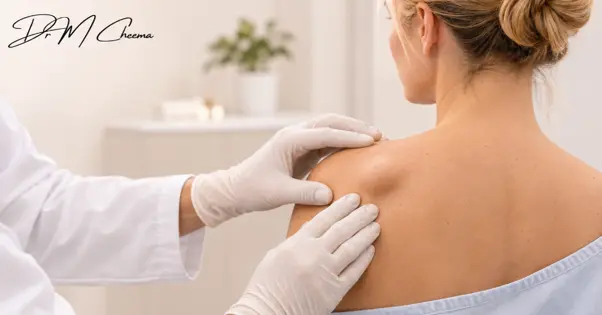
The initial assessment usually involves examining the lump, checking its size and location, and determining whether it feels soft, mobile, or attached to deeper tissues. Lipomas are sometimes confused with other common lumps, such as a sebaceous cyst or skin tags, which is why an accurate diagnosis matters.
Your clinician may ask when you first noticed the lump, whether it has changed, and whether you have experienced pain or other symptoms.
Ultrasound Scanning
An ultrasound scan may be recommended when the diagnosis is uncertain or the lump requires closer examination. It can help assess the size, depth, and structure of a soft-tissue mass.
MRI or Further Investigations
Some lumps, particularly those that are large or located deep within the tissues, may require an MRI or specialist assessment.
If the lump has concerning features, your clinician may recommend an appropriate referral before considering routine removal.
Laboratory Examination
When a lipoma is surgically removed, the tissue may be sent to a laboratory for histological examination. This involves examining the sample under a microscope to confirm the diagnosis.
The need for testing depends on the clinical circumstances and the treating clinician’s assessment.
What Happens During Lipoma Removal Surgery?
Surgical excision is a commonly used method for removing a lipoma. The exact procedure depends on the lump’s size, depth, location, and relationship to nearby structures.
Step 1: Consultation and Assessment
Your surgeon will examine the lump, review any relevant investigations, and discuss why removal is being considered. Reading what you should know before surgery can help you prepare useful questions for this appointment.
This appointment is also an opportunity to discuss your medical history, medications, allergies, and any previous problems with wound healing or anaesthesia.
Step 2: Anaesthesia
Many small, superficial lipomas can be removed under local anaesthesia. This numbs the treatment area so that you remain awake without feeling pain from the surgical incision.
Larger, deeper, or more complex lipomas may require a different approach or a hospital setting. Your surgeon will explain the most appropriate option for your circumstances.
Step 3: Surgical Excision
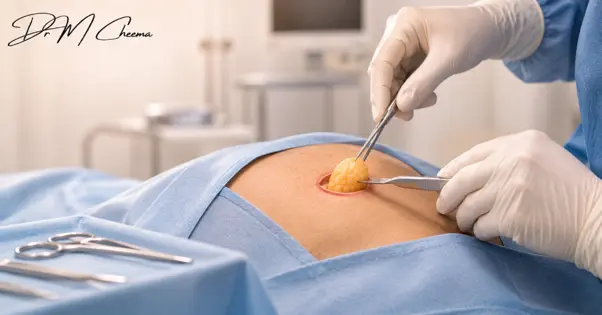
Once the area is numb, the surgeon makes an incision in the skin over the lump. The lipoma is carefully separated from the surrounding tissue and removed, using the same precise approach as Mr Cheema’s skin lump and lesion removal treatment.
The incision length depends on the size and position of the lipoma. Larger growths may require a longer incision than smaller ones.
Step 4: Closing the Wound
After removing the lump, the surgeon closes the incision using suitable stitches and applies a dressing.
The removed tissue may be sent for laboratory examination when indicated.
Step 5: Aftercare and Follow-Up
Before you leave, you should receive instructions about wound care, activity restrictions, pain relief, and follow-up appointments.
Many straightforward procedures are performed as day cases, allowing patients to return home on the same day. However, the appropriate setting depends on the complexity of the operation and your individual needs.
How Much Does Private Lipoma Removal Cost in the UK?
The cost of private lipoma removal in the UK varies considerably. There is no single price that applies to every patient because the procedure may involve anything from removing a small, superficial lump to operating on a larger or deeper growth.
As a general budgeting guide, private lipoma removal may cost approximately £400 to £1,800 or more per procedure, depending on the clinic, the surgeon, and the complexity of treatment. This is an indicative range rather than a confirmed quotation from Dr Cheema.
A personalised price should be provided after assessment.
Factors That Affect Lipoma Removal Cost
Size of the lipoma
Small lipomas may be simpler to remove, while larger growths can require a longer incision, additional surgical time, or more complex wound closure.
Location of the lump
The cost may differ depending on whether the lipoma is on the arm, back, neck, face, or another area. Some locations require greater precision because of nearby nerves, blood vessels, or other structures.
Depth and complexity
A superficial lump may be suitable for a straightforward procedure under local anaesthesia. A deep or complex growth may require imaging, specialist planning, or treatment in a hospital.
- Consultation fees
Some clinics charge separately for the initial assessment, while others may include certain consultations within a treatment package.
- Anaesthesia and facility fees
Local anaesthesia is often suitable for small lipomas. If sedation, general anaesthesia, or hospital facilities are required, the overall cost may increase.
Histology and follow-up
Laboratory examination, dressings, stitch removal, and follow-up appointments may be included in the quoted price or charged separately.
How to Get an Accurate Lipoma Removal Quote
Before agreeing to private surgery, ask for a written breakdown of the expected costs.
Confirm whether the quote includes:
- The initial consultation.
- Any recommended imaging or investigations.
- The surgeon’s fee.
- Anaesthesia and facility charges.
- Laboratory examination, if required.
- Post-operative reviews and wound care.
Understanding these details can help you compare treatment options fairly and avoid unexpected expenses.
Get Expert Advice About Your Lump in Birmingham
A new or changing lump deserves the right assessment. Understanding whether it is a lipoma and whether removal is appropriate is the first step towards choosing a suitable treatment plan. Speak with a qualified medical professional to discuss your concerns, the available investigations, and the options that may be appropriate for you.
What Are the Benefits of Lipoma Removal?
When surgery is clinically appropriate, removing a lipoma may offer several benefits.
Relief From Discomfort
If a lipoma is responsible for pressure or discomfort, removing it may help relieve these symptoms. The outcome depends on the underlying cause of the pain and the relationship between the lump and surrounding tissues.
Improved Appearance
A prominent lipoma can create a visible bulge beneath the skin. Removing it may reduce the prominence of the lump and improve the appearance of the affected area.
However, surgery leaves a scar, and the final cosmetic result varies between individuals.
Easier Everyday Activities
A lipoma that interferes with movement or causes pressure when sitting, exercising, or wearing clothing may become less troublesome after successful removal.
Confirmation of the Diagnosis
When tissue is sent for histological examination, laboratory testing can help establish the nature of the removed lump.
Lipoma Removal Recovery: What to Expect
Recovery depends on the size of the lipoma, its location, the surgical technique, and your general health. Following these tips to recover faster after surgery can support healing, and laser treatment for surgical scars may help improve how the scar looks over time.
After a straightforward procedure under local anaesthesia, many patients can return home shortly afterwards. However, returning to normal activities should depend on your clinician’s advice.
The First Few Days
Some tenderness, bruising, and swelling are expected around the incision. Keep the dressing and wound clean and follow the instructions provided by your surgical team.
Avoid unnecessary pressure or friction over the treated area.
Wound Healing
Small wounds may heal relatively quickly, while larger incisions can take longer. If non-dissolvable stitches are used, you will be told when they should be removed.
Dissolvable stitches do not usually require removal, although the wound still needs appropriate care.
Returning to Work and Exercise
Your return to work will depend on the type of work you do and the location of the incision. Desk-based work may be possible sooner than physically demanding activities.
Avoid strenuous exercise, heavy lifting, or movements that place tension on the wound until your clinician confirms that these activities are appropriate.
Scar Development
A surgical scar is an expected part of lipoma removal. Initially, it may appear pink or raised before gradually changing as healing progresses.
Scar maturation can take several months or longer. Once the wound has fully healed, your clinician may discuss suitable scar-care options if needed.
Follow-Up Appointments
Attend any scheduled reviews so that your surgeon can assess healing and discuss laboratory results, if applicable.
If the lump was sent for histology, ask how and when you will receive the results.
Book a Lipoma Removal Consultation with Mr Cheema
If you have a lump beneath your skin that is growing, causing discomfort, or affecting your confidence, professional assessment can help you understand your treatment options. Dr Cheema offers specialist surgical expertise in Birmingham, helping patients explore suitable approaches based on their individual needs. Take the next step towards understanding your options for lipoma removal, expected costs, and recovery.
Take the Next Step Towards Personalised Surgical Advice
If you have a lump that concerns you, the next step is to establish what it is and whether treatment is necessary. A suitable assessment can help clarify your options, expected costs, and the potential benefits and limitations of removal.
Lipoma Removal FAQs
Is Lipoma Removal Available Privately in the UK?
Yes. Private clinics and hospitals offer lipoma removal following an appropriate clinical assessment. The recommended approach depends on the size, location, depth, and characteristics of the lump.
Is Lipoma Removal Expensive Without Insurance?
Private lipoma removal may cost approximately £400 to £1,800 or more, depending on the complexity of the procedure and the clinic. Consultation fees, imaging, histology, and follow-up care may be charged separately. Request a personalised quotation before proceeding.
Will the NHS Remove a Lipoma or Is It Cosmetic?
The NHS may offer removal when a lipoma causes significant symptoms, affects function, or meets other clinical criteria. Harmless lipomas that do not cause problems are not routinely removed. Local policies determine eligibility for NHS-funded treatment.
Does Every Lipoma Need Surgery?
No. Most lipomas are harmless and can be monitored without treatment. Surgery may be considered if the lump causes discomfort, restricts movement, creates significant cosmetic concerns, or requires removal for diagnostic reasons.
Can a Lipoma Become Cancerous?
A typical lipoma is benign and does not usually become cancerous. However, some malignant soft-tissue tumours can resemble a lipoma. Rapid growth, a hard or fixed lump, persistent pain, or a deep mass should be assessed by a healthcare professional.