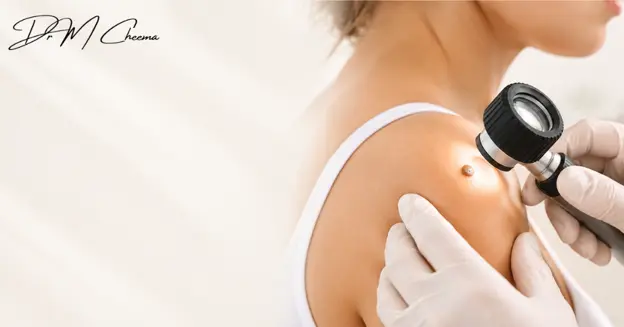
Moles are extremely common and most are harmless. They can appear anywhere on the skin and may be present from birth or develop during childhood and adulthood. Some moles remain unchanged for many years, while others can naturally change over time. However, a mole that changes in appearance, becomes symptomatic, or looks noticeably different from your other moles should be assessed by an appropriate healthcare professional.
Dr. Cheema approach to surgical and aesthetic care focuses on individual assessment, patient safety, and carefully planned treatment. If you have a mole that you are concerned about because of its appearance, location, size, or recent changes, a professional assessment can help determine whether it should simply be monitored or whether removal may be appropriate.
What Is a Mole?
A mole, medically known as a melanocytic naevus, is a common type of skin growth formed by collections of pigment producing cells called melanocytes.
Moles can vary considerably in appearance.
They may be:
- Flat or raised
- Small or relatively large
- Light brown, dark brown, pink, or close to your natural skin colour
- Round or oval
- Smooth or slightly textured
Some people have only a few moles, while others have many.
Having moles does not automatically mean that there is a medical problem. Most ordinary moles remain benign. The important consideration is whether a mole changes or develops features that require professional assessment.
Why Do People Have Moles Removed?
Mole removal is not always necessary. A mole may be removed for several different reasons, depending on the individual circumstances.
Cosmetic Concerns
Some people dislike the appearance of a prominent mole and may wish to have it removed for cosmetic reasons. This can be particularly relevant if the mole is on the face, neck, or another visible area.
Repeated Irritation
A raised mole may repeatedly catch on clothing, jewellery, or other objects. If a mole is frequently irritated, a doctor may assess whether removal is appropriate.
Changes in Appearance
A mole that changes in size, shape, colour, or other characteristics should be assessed before cosmetic removal is considered. The priority is to establish whether further medical investigation is necessary.
Diagnostic Reasons
Sometimes a mole may need to be removed or sampled so that the tissue can be examined under a microscope. This is different from removing a mole purely for cosmetic reasons.
When Should a Mole Be Checked?
Most moles are harmless, but certain changes deserve medical attention. You should consider having a mole assessed if you notice changes such as:
- A change in size
- An irregular or changing shape
- Multiple colours within the mole
- Increasing asymmetry
- A new mole that looks unusual
- Bleeding
- Persistent itching
- Crusting
- Persistent tenderness
- A mole that looks very different from your other moles
These changes do not automatically mean that a mole is cancerous. There can be many benign explanations for changes in skin lesions. However, it is important not to assume that an unusual mole is harmless without an appropriate assessment.
What Is the ABCDE Rule for Moles?
The ABCDE method is commonly used as a simple way to remember some warning signs associated with potentially concerning moles.
A Means Asymmetry
One half of the mole does not look similar to the other half.
B Means Border
The edges may appear irregular, uneven, blurred, or poorly defined.
C Means Colour
A mole may contain several colours rather than having a relatively uniform appearance.
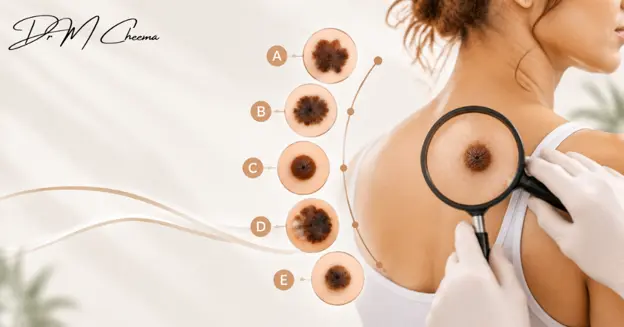
D Means Diameter
Larger lesions may warrant particular attention, although size alone does not determine whether a mole is concerning.
E Means Evolving
A mole that changes over time can require assessment.
The ABCDE rule is a useful awareness tool, but it should not be used to diagnose skin cancer yourself. If you are concerned about a mole, professional assessment is more appropriate than relying solely on photographs or online information.
Does a New Mole Need to Be Checked?
A new mole is not automatically a cause for concern. New moles can develop during different stages of life. However, a new or changing skin lesion that appears unusual should be assessed, particularly if it has characteristics that differ from your other moles.
This is especially important if the lesion continues to change. Keeping an eye on your skin and becoming familiar with your usual moles can help you notice changes that may otherwise be overlooked.
How Is a Mole Assessed?
Assessment usually begins with a medical history and examination of the lesion.
The clinician may ask:
- How long you have had the mole
- Whether it has changed
- Whether it has bled or become irritated
- Whether it causes symptoms
- Whether you have noticed similar lesions elsewhere
The mole may then be examined closely. Depending on the findings, further assessment may be recommended before removal. A suspicious lesion should not simply be removed as a cosmetic procedure without appropriate consideration of the possibility of skin cancer.
What Happens During Mole Removal?
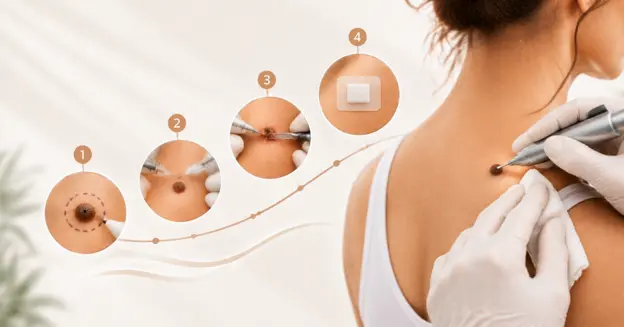
The exact procedure depends on the type and location of the mole. Local anaesthetic may be used to numb the area so that the procedure can be performed with minimal discomfort. The surgeon removes the mole using an appropriate technique based on its characteristics.
In some cases, the resulting wound may be closed with stitches. The removed tissue may also be sent for histological examination when medically appropriate. The specific approach depends on the individual lesion.
What Is Surgical Mole Removal?
Surgical excision involves removing the mole along with an appropriate margin of surrounding skin when clinically indicated. The wound is then closed, often using sutures. This method can be particularly useful when the lesion needs to be removed completely or when the tissue needs to be examined by a laboratory.
One consideration with surgical excision is that it leaves a scar. The final scar depends on factors such as the size and location of the removal, the technique used, and the patient’s individual healing response.
Have a Mole You Are Concerned About?
If you have noticed a change in a mole or are concerned about its appearance, arrange a consultation with Dr. Cheema in Birmingham. A professional assessment can help determine whether monitoring, further investigation, or removal may be appropriate.
Will Mole Removal Leave a Scar?
Any procedure that involves cutting the skin can leave a scar. The size and appearance of the scar depend on the removal technique, the size of the lesion, its location, the way the wound heals, and individual skin characteristics.
For some patients, the scar may become a relatively fine line over time. However, no surgeon can guarantee that a scar will completely disappear. Scar maturation can continue for many months after the procedure.
Patients should follow their postoperative wound care instructions carefully to support appropriate healing.
What Happens After Mole Removal?
After removal, the treated area needs time to heal. You may have a dressing over the wound, depending on the location and type of procedure. If stitches are used, you will be given instructions about wound care and when they should be removed or reviewed.
The area may initially appear red or swollen. As healing progresses, the scar can gradually become flatter and less noticeable. It is important not to pick at the healing area or interfere with the wound.
You should also follow any instructions about keeping the area clean, protecting it from sunlight, and attending follow up appointments.
What Happens If a Removed Mole Is Found to Be Abnormal?
If a mole is removed because there is a medical concern, the tissue may be examined by a pathologist. The laboratory report can provide information about the nature of the lesion.
If the result indicates that additional treatment or assessment is necessary, your healthcare team will explain the next steps.
This is one reason appropriate assessment before and during mole removal is important. Cosmetic concerns should never override the need to investigate a potentially suspicious lesion.
Can You Remove a Mole from the Face?
Moles can occur on the face and may sometimes be removed when clinically appropriate. Because facial skin is highly visible, scar placement and surgical planning are particularly important considerations.
The surgeon needs to balance complete and appropriate removal with careful closure of the skin. Even with careful technique, a scar cannot be guaranteed to disappear. Your consultation should include a discussion of the expected scar and the potential benefits and risks of removal.
What Should You Tell Your Surgeon Before Mole Removal?
During your consultation, tell your surgeon about any changes you have noticed in the mole.
Useful information includes:
- When you first noticed it
- Whether it has increased in size
- Whether the colour has changed
- Whether it has bled
- Whether it has become painful or itchy
- Whether it has been repeatedly irritated
- Whether you have had previous skin procedures
You should also provide information about your general medical history and medications when requested. This allows the surgeon to plan treatment appropriately.
Mole Removal and Scarring
One of the most important things to understand before mole removal is that removing a mole does not necessarily mean removing every visible mark from the skin. If surgical excision is required, a scar will usually remain. However, scars generally change with time.
They may initially appear pink, red, raised, or darker than the surrounding skin before gradually becoming softer and less noticeable. The final appearance depends on individual healing characteristics as well as the size and location of the removal.
Dr. Cheema also provides scar correction treatments for patients concerned about the appearance of existing scars, using techniques selected according to the type and characteristics of the scar.
Mole Removal in Birmingham with Dr. Cheema
Mole removal should begin with appropriate assessment rather than simply treating a mole because it is visible or cosmetically bothersome. Dr. Cheema takes a personalised approach to surgical care, with his practice offering a range of cosmetic and reconstructive procedures in Birmingham.
If you have a mole that has changed, is repeatedly irritated, or is affecting your confidence, a consultation can help you understand whether removal is appropriate, which technique may be considered, and what to expect regarding healing and scarring. Dr. Cheema’s specialist surgical training includes the UK, Sweden, and Spain, and his practice emphasises individualised treatment planning and patient care.
Explore Mole Removal Options
If a benign mole is affecting your confidence or is repeatedly irritated by clothing or jewellery, Dr. Cheema can discuss suitable removal options and explain what you can expect from the procedure, healing process, and potential scar.
Frequently Asked Questions
Are most moles harmless?
Yes. Most ordinary moles are benign. However, a mole that changes in appearance or develops concerning features should be assessed by an appropriate healthcare professional.
When should I worry about a mole?
Changes in size, shape, colour, border, or overall appearance can warrant assessment. Bleeding, persistent itching, crusting, or a mole that looks very different from your other moles should also be checked.
Can I have a mole removed for cosmetic reasons?
Some benign moles can be removed for cosmetic reasons. However, the lesion should be appropriately assessed before cosmetic removal to determine whether there are any features requiring further investigation.
Does mole removal hurt?
Local anaesthetic can be used for many minor mole removal procedures, which numbs the treatment area. Some tenderness may occur after the procedure while the skin heals.
Will mole removal leave a scar?
Surgical mole removal can leave a scar because an incision is made in the skin. The appearance of the scar depends on the size and location of the mole, the removal technique, and individual healing.