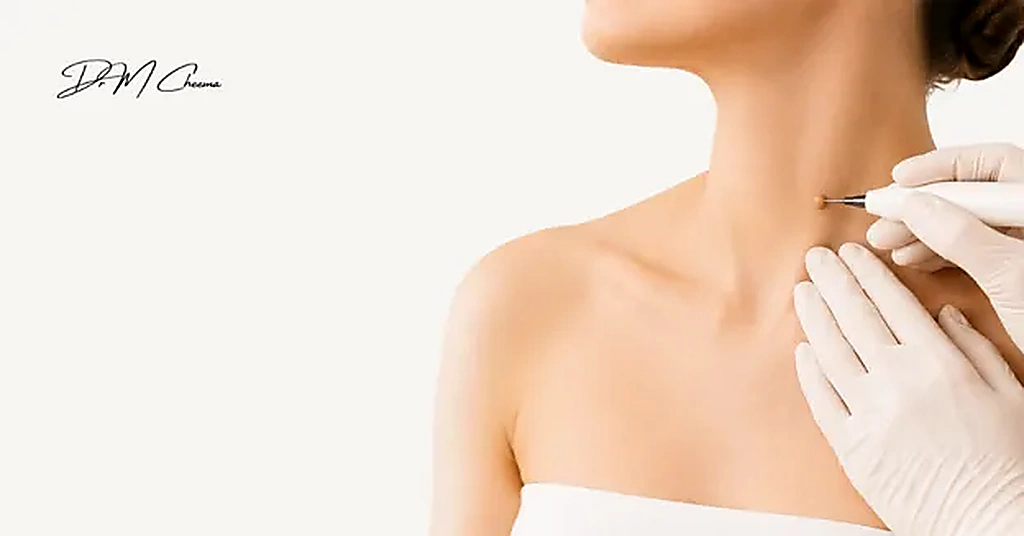
Skin tags are common, harmless skin growths that often appear in areas where skin rubs against skin, clothing or jewellery. They may develop on the neck, underarms, eyelids, under the breasts or around the groin.
Although skin tags are usually benign, they can become irritating, catch on clothing or affect your confidence when they appear in visible areas. This often leads people to search for quick ways to remove them at home.
Online skin tag removal kits may promise fast results using freezing devices, creams, bands or patches. However, these products cannot confirm whether the growth is genuinely a skin tag. Using them incorrectly can cause bleeding, infection, burns, pigmentation changes and scarring.
Safe skin tag removal should begin with an accurate diagnosis. Once the growth has been assessed, a qualified medical professional can explain whether removal is appropriate and recommend the most suitable treatment for its size, location and appearance.
At Dr Cheema’s practice in Birmingham, patients receive personalised advice about skin blemishes and minor procedures, with treatment recommendations based on the individual lesion and the patient’s needs.
What Is a Skin Tag?
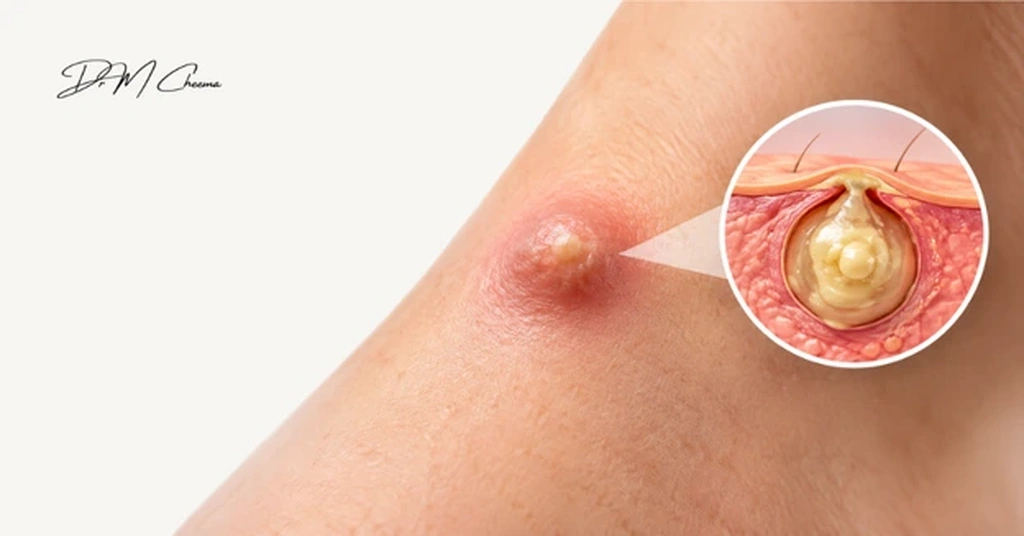
A skin tag, medically known as an acrochordon, is a soft, benign growth that usually hangs from the skin by a narrow stalk. It may be skin-coloured, slightly darker than the surrounding skin or occasionally more pigmented.
Some skin tags are only a few millimetres wide, while others can become larger over time. They are usually soft and smooth rather than hard, rough or scaly.
Skin tags commonly develop in areas exposed to repeated friction, including the neck, armpits, groin, eyelids, under the breasts and other skin folds. Some people develop one or two, while others may gradually develop several.
Most skin tags do not require treatment for medical reasons. Removal is usually considered when they become irritated, repeatedly catch on clothing or jewellery, interfere with shaving or cause cosmetic concern.
Why Do Skin Tags Develop?
There is no single cause of skin tags. Friction appears to play an important role, which is why they often develop in skin folds or areas where clothing repeatedly rubs against the skin.
They may also become more common with age. Pregnancy, obesity, skin folds and type 2 diabetes have also been associated with a greater likelihood of developing skin tags.
However, having a skin tag does not automatically indicate an underlying health problem. In many cases, they develop without any obvious explanation.
Are Skin Tags Dangerous?
Genuine skin tags are usually harmless and non-cancerous. The main concern is not normally the skin tag itself but whether the growth has been correctly identified.
Moles, warts and other skin lesions can sometimes resemble skin tags, particularly when viewed without medical training. A home removal kit cannot determine what type of lesion you are treating.
If a mole or another unusual growth is mistaken for a skin tag and treated with chemicals, freezing products or cutting devices, the area may become damaged and future assessment may be more difficult.
For this reason, professional assessment is an important first step before any skin growth is removed.
How Can You Tell a Skin Tag from a Wart or Mole?
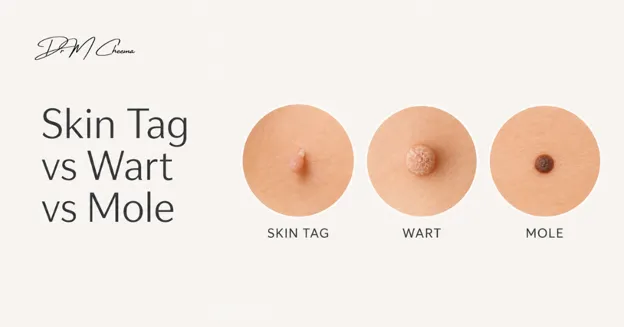
Skin tags, warts and moles can look similar, but they are different types of skin growth.
Skin tags are usually soft, smooth and attached to the skin by a narrow stalk. They commonly appear in areas affected by friction.
Warts are often firmer and rougher. They are caused by the human papillomavirus and may spread to other areas.
Moles are made up of pigment-producing cells. They can be flat or raised and may vary in colour, shape and size.
These differences are not always easy to identify at home. If you are unsure what a growth is, it is safer to have it examined before considering removal.
When Should Skin Growth Be Checked?
A suspected skin tag should be professionally assessed if it changes, grows quickly, bleeds without obvious injury, becomes persistently painful or develops an unusual colour or shape.
You should also seek advice if it repeatedly becomes inflamed, looks noticeably different from your other skin tags, is unusually large or appears close to a delicate area such as the eye.
The sudden appearance of many new skin tags may also justify a medical discussion. These signs do not necessarily indicate a serious problem, but they should not be ignored or treated at home without assessment.
Why Do People Choose Skin Tag Removal?
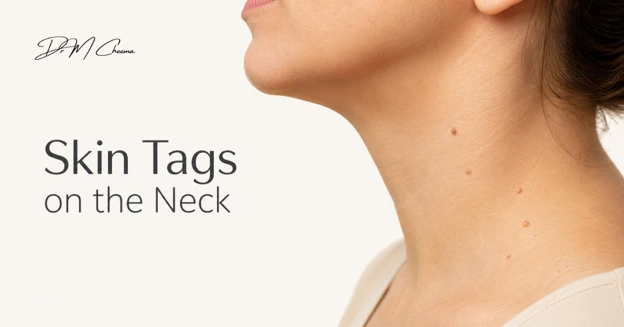
Skin tags are often removed for practical or cosmetic reasons.
A tag on the neck may catch on necklaces, collars or seatbelts. Those in the armpits can become irritated during shaving, while tags beneath the breasts or in other skin folds may rub against clothing and become sore.
Some skin tags twist, bleed or become inflamed after repeated friction. Others are removed because they are visible and affect how a person feels about their appearance.
Professional skin tag removal can provide a controlled solution when a tag is causing discomfort, repeated irritation or cosmetic concern.
How Is Professional Skin Tag Removal Performed?
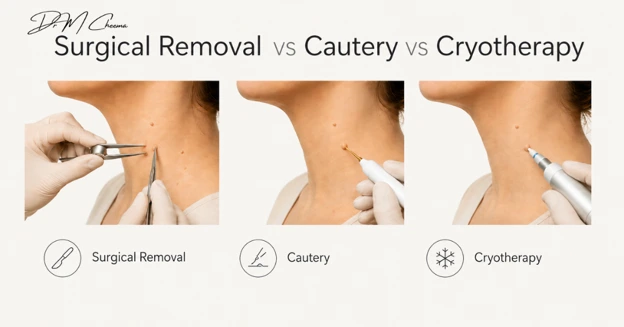
The most suitable treatment depends on the size, location, number and appearance of the skin tag. Your medical history, tendency to scar and the possibility of pigmentation changes may also influence the recommendation.
Common professional techniques include surgical removal, cautery and cryotherapy.
Surgical Removal
Small skin tags can sometimes be removed by carefully cutting through the stalk using sterile surgical instruments. Local anaesthetic may be used depending on the size and location of the lesion.
This method allows the growth to be removed directly and gives the clinician control over any bleeding. It may also be appropriate when there is uncertainty about the diagnosis and the tissue needs to be examined.
Cautery
Cautery uses controlled heat or electrical energy to treat the tissue. It may be suitable for certain small skin lesions and can help control bleeding during treatment.
Cryotherapy
Cryotherapy uses a very cold substance, commonly liquid nitrogen, to destroy the targeted tissue. The treated skin tag may then dry and fall away as the area heals.
Not every technique is suitable for every skin tag. A professional assessment is therefore essential before treatment is selected.
Why Professional Assessment Matters
Safe skin tag removal involves more than making the visible growth disappear. The first priority is confirming that the lesion has the typical appearance of a benign skin tag.
The location also matters. Treating a small tag on the neck is very different from treating one close to the eyelid, lips or another sensitive structure.
A clinician can also consider the risk of bleeding, scarring and pigmentation changes. This is particularly important for people with darker skin tones or a personal tendency to develop prominent scars.
The aim should be safe, controlled removal with an appropriate cosmetic result, rather than simply using the fastest available method.
Why Are Home Skin Tag Removal Kits Popular?
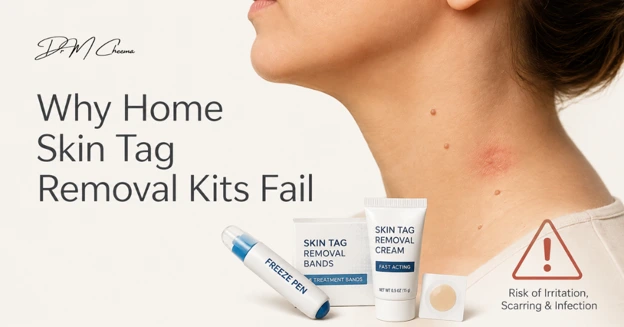
Home kits are attractive because they appear convenient, inexpensive and easy to use. Many promise results within hours or days and are marketed as painless, natural or suitable for overnight removal.
Social media before-and-after images can make these products appear reliable. However, removing a skin growth is still a medical procedure, even when the product is purchased online and used at home.
The risks do not disappear because the treatment comes in a small package. Without a proper diagnosis, you may be treating the wrong type of lesion or damaging healthy skin around it.
Why Can Home Skin Tag Removal Kits Fail?
The most serious concern is misdiagnosis. A wart, mole or another skin lesion may be mistaken for a skin tag. Applying chemicals, freezing products or cutting devices without knowing what the lesion is can cause unnecessary injury and delay appropriate assessment.
Home freezing products may also be too weak to treat the full depth of the lesion or too strong for the surrounding skin. Inconsistent application can leave part of the skin tag behind or cause blistering and burns.
Chemical products create similar problems. Acids, herbal mixtures and other substances cannot distinguish between the skin tag and healthy skin. Incorrect application may result in irritation, open wounds, pigmentation changes or scarring.
Skin tag bands are not suitable for every lesion. They may be difficult to position correctly on larger tags, broad-based growths or lesions that are not actually skin tags.
Cutting a skin tag at home can cause more bleeding than expected because skin tags contain blood vessels. Household scissors, nail clippers and other non-medical instruments also increase the risk of contamination and infection.
Repeated attempts to remove a tag can create a larger wound than the original lesion. This may leave a more noticeable scar, particularly if the area becomes infected or is repeatedly picked while healing.
What About Apple Cider Vinegar and Other Natural Remedies?
Apple cider vinegar, tea tree oil, garlic and baking soda are often promoted online as natural skin tag treatments.
However, natural does not automatically mean safe. These substances can irritate or burn the skin, particularly when applied repeatedly or left in place for long periods.
There is no advantage in deliberately damaging healthy skin when established professional removal techniques are available. Any product that causes significant burning, blistering, open wounds or severe redness should be stopped and medically assessed.
Can You Use a Wart Remover on a Skin Tag?
Warts and skin tags are different types of growth, so wart treatments are not designed for skin tags.
Wart removers may contain ingredients strong enough to irritate or damage the surrounding skin. The American Academy of Dermatology advises against using wart remover on skin tags because it can cause irritation and scarring.
The correct treatment begins with the correct diagnosis.
Can You Cut a Skin Tag Off Yourself?
Self-removal is not recommended. Cutting a skin tag can cause bleeding, infection and scarring, while also creating the risk of treating a lesion that has been incorrectly identified.
The risk is even greater when the growth is on the eyelid, face, genital area or another sensitive location. If a skin tag is bothering you enough to remove it, professional treatment is a safer option.
Is Professional Skin Tag Removal Painful?
The level of discomfort depends on the size, location and treatment method.
Very small skin tags may be treated quickly, while larger or more sensitive lesions may require local anaesthetic. Some temporary tenderness, redness or swelling can occur after treatment.
Your clinician should explain the proposed technique, expected discomfort and aftercare before treatment begins.
Will Skin Tags Grow Back?
Once an individual skin tag has been completely removed, it does not usually grow back in exactly the same place.
However, removal does not prevent new skin tags from developing elsewhere. People who are naturally prone to skin tags may continue to develop them over time, particularly in areas exposed to friction.
Can Skin Tags Be Prevented?
There is no guaranteed way to prevent skin tags. Reducing friction may help in some cases, but factors such as genetics, ageing, hormonal changes and individual skin characteristics also play a role.
Developing several skin tags does not necessarily mean that anything is wrong. However, sudden changes or the appearance of many new growths should be discussed with a medical professional.
What Happens During a Skin Tag Consultation?

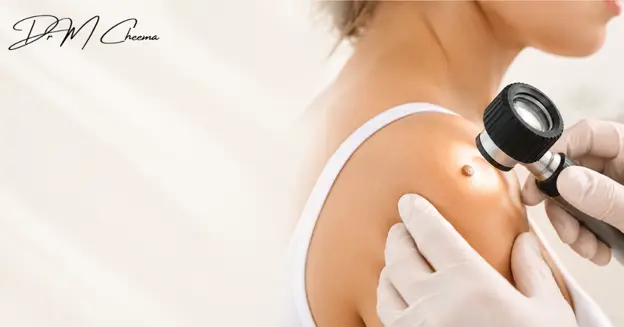
During a consultation, the lesion will be examined before any treatment is recommended. The clinician may ask how long it has been present, whether it has changed, whether it bleeds or becomes painful and whether you have noticed similar growths elsewhere.
Your medical history, medications, tendency to scar and risk of pigmentation changes may also be considered.
If the lesion appears to be a straightforward skin tag, suitable removal options can be discussed. If there is uncertainty about the diagnosis, further assessment may be recommended instead of immediate cosmetic treatment.
What Happens After Skin Tag Removal?
Aftercare depends on the technique used. A small wound, scab or area of redness may be present while the skin heals.
You may be advised to keep the area clean, avoid picking at the treated skin and reduce friction while healing. It is also important to follow any specific wound-care instructions provided by your clinician.
The healing time varies according to the size and location of the skin tag and the treatment method used.
Does Skin Tag Removal Leave a Scar?
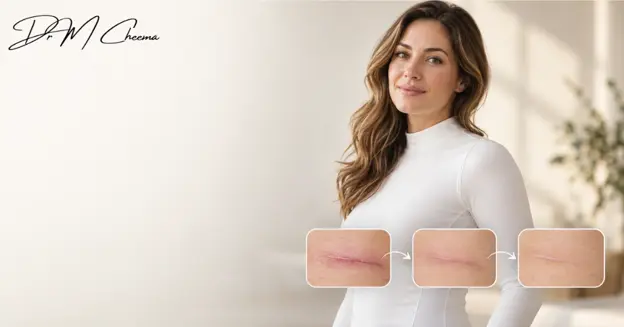
Any treatment that disrupts the skin can leave a mark or scar. For small skin tags, the final mark may be minimal, but this cannot be guaranteed.
The result depends on the size and location of the lesion, the removal technique, your skin type and your individual healing response. Temporary or longer-lasting pigmentation changes can also occur.
A consultation allows you to discuss these risks before deciding whether removal is worthwhile.
Is Skin Tag Removal Available on the NHS?
Skin tags are usually harmless, so removal is commonly considered cosmetic. Routine skin tag removal is therefore generally not available through the NHS purely for appearance.
If a lesion is painful, bleeding, changing or causing another medical concern, you should still speak to your GP. In these circumstances, assessment may be more important than cosmetic removal.
Skin Tag Removal in Birmingham
If a skin tag is affecting your comfort or confidence, the safest option is not necessarily the quickest product available online. The right approach begins with confirming exactly what the growth is.
At Dr Cheema’s Birmingham practice, each lesion is assessed individually before treatment is recommended. Mr Mubashir Cheema is an internationally trained Plastic, Reconstructive & Aesthetic Surgeon with more than 20 years of experience, focusing on personalised care, patient safety and natural-looking results.
Professional assessment is particularly valuable when a skin tag is large, repeatedly irritated, located on a visible area or difficult to distinguish from another type of skin lesion.
Arrange Your Consultation
onsidering skin tag removal in Birmingham? Have the area assessed and discuss the safest treatment for your individual needs.
Safe Skin Tag Removal Starts with the Correct Diagnosis
Skin tags may look simple, but safe removal requires more than cutting, freezing or burning the visible growth.
The first question should always be whether the lesion is definitely a skin tag. Once this has been established, its size, location, skin type and your medical history can be considered when choosing the most appropriate treatment.
Home removal kits cannot provide this clinical assessment. They may fail to remove the lesion completely and can expose you to bleeding, infection, burns, pigmentation changes and scarring.
If you have a skin tag that catches on clothing, becomes irritated or affects your confidence, professional advice can help you understand your options.
Frequently Asked Questions
What is the safest way to remove a skin tag?
The safest approach is to have the growth assessed by a qualified medical professional first. Once it has been confirmed as a skin tag, the most suitable removal method can be selected according to its size and location.
Can I remove a skin tag at home?
Self-removal is not recommended. Cutting, freezing or applying chemicals at home can cause bleeding, infection, burns, pigmentation changes and scarring. There is also a risk that the growth has been incorrectly identified.
Why do skin tag removal kits fail?
A kit may be unsuitable for the size or location of the lesion, may not treat the full depth of the skin tag or may be used on a growth that is not actually a skin tag. Repeated attempts can increase irritation and damage to the surrounding skin.
Can I use wart remover on a skin tag?
No. Warts and skin tags are different types of growth. Wart treatments may irritate or damage the surrounding skin and can cause scarring when used incorrectly on a skin tag.
Does skin tag removal leave a scar?
A small mark or scar is possible whenever the skin is treated. The risk depends on the size and location of the lesion, the removal method, your skin type and your individual healing response.