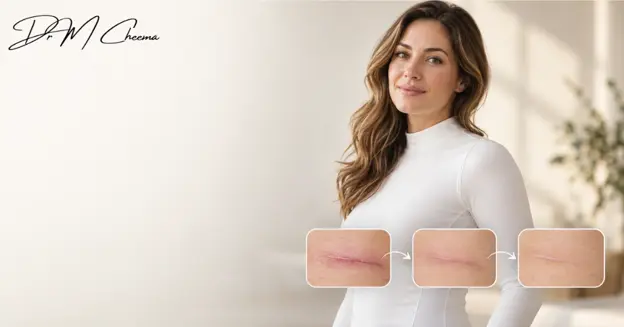
Breast reduction surgery can make a meaningful difference for women who experience discomfort, heaviness, or difficulty caused by larger breasts. By removing excess breast tissue, fat, and skin, the procedure can create a more balanced breast shape while helping reduce physical strain. However, one of the most common concerns before surgery is scarring.
At Dr. Cheema’s Birmingham practice, breast surgery is tailored to each patient’s anatomy, goals, and expectations. Understanding how scars change over time can help you approach recovery with realistic expectations and greater confidence. Dr. Cheema also provides guidance on scar care to help scars mature as well as possible.
Will Breast Reduction Leave Scars?
Yes. Breast reduction surgery involves incisions, so some degree of scarring should be expected. The location and length of your scars depend on the surgical technique required for your breast size, shape, amount of tissue being removed, skin quality, and the degree of reshaping needed.
Common breast reduction incision patterns may involve a scar around the areola and a vertical scar extending downward from the areola. Some patients may also require an additional scar along the crease underneath the breast.
This can create a pattern sometimes described as an anchor shaped scar. Not every patient will have the same scar pattern. Your surgeon will determine the most appropriate incision design during your consultation.
The purpose of these incisions is not simply to make the breasts smaller. Breast reduction surgery also involves reshaping and repositioning breast tissue and the nipple and areola when necessary. The incision pattern therefore needs to allow the surgeon to achieve an appropriate shape while maintaining safety.
Dr. Cheema’s approach is to plan incisions carefully and place them in areas that can become less noticeable as healing progresses. His website also explains that breast surgery incisions can be strategically positioned around the areola and underneath the breast where appropriate.
What Do Breast Reduction Scars Look Like at 6 Weeks?
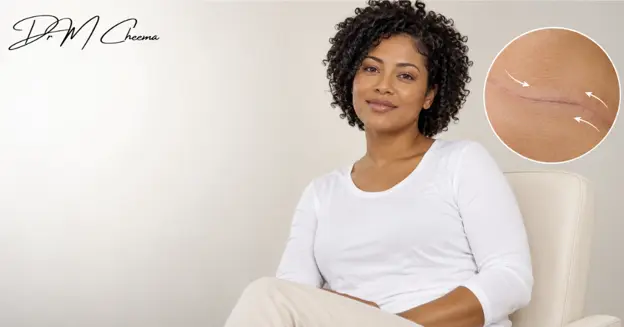
Six weeks after breast reduction surgery, your scars are still relatively early in the healing process. At this stage, it is completely normal for scars to look more noticeable than you expected. They may appear pink, red, darker than the surrounding skin, or slightly raised. Some areas may also feel firm or tight.
The breasts themselves can still have swelling at six weeks. As swelling gradually decreases, the breast shape continues to settle, and the scars also begin to change. You may notice that one side appears to be healing slightly differently from the other. Small differences during recovery do not necessarily mean there is a problem. The two sides of the body do not always heal at the same rate.
Common scar changes at six weeks include:
- Pink or reddish coloration
- Mild firmness around the incision
- Slight thickening in some areas
- Tightness or sensitivity
- Mild itching as the skin continues to heal
- Uneven coloration along parts of the incision
- Increased visibility compared with the surrounding skin
It is important not to judge the final appearance of your scars at six weeks.
A scar is not finished healing simply because the skin has closed. Scar maturation can continue for many months, and the appearance can gradually soften, flatten, and fade. Your surgeon will advise you about when it is appropriate to begin specific scar care. Following your postoperative instructions is particularly important during this stage.
What Do Breast Reduction Scars Look Like at 6 Months?
By six months, many breast reduction scars have changed considerably compared with the first several weeks after surgery. For many patients, scars become flatter and softer as they mature. The colour may also begin to become closer to the surrounding skin, although this process can take longer depending on individual healing.
Some patients may still have visible pink, red, brown, or darker areas along the incision at six months. This does not necessarily indicate poor healing. Scar maturation is influenced by individual factors. Some people naturally develop scars that remain more noticeable for longer, while others see significant fading within several months.
At six months, the breasts may also have a more settled appearance. Much of the early postoperative swelling has usually reduced, although subtle changes can continue. The scar underneath the breast can sometimes become less noticeable because it follows the natural breast crease. Scars around the areola may also become less obvious as they mature and blend with the natural transition between the areola and surrounding skin.
However, no surgeon can guarantee that scars will disappear completely. The realistic goal is to help scars become as fine and discreet as possible while allowing the surgical result to heal naturally.
What Do Breast Reduction Scars Look Like After One Year?
One year after breast reduction surgery, scars are usually much more mature than they were during the first few months. Many scars become flatter, softer, and less noticeable over time. Their colour can also continue to fade.
For some patients, the scars may eventually become thin lines that are relatively difficult to notice unless someone looks closely. Other patients may continue to have more visible scars because of their individual skin characteristics and healing response.
It is important to understand that one year is not necessarily the absolute end of scar maturation. Scars can continue to change beyond the first year. Their texture and colour may gradually improve over an even longer period.
The final appearance of a breast reduction scar depends on several factors, including:
- Genetics
- Skin type
- Age
- The surgical technique
- Incision placement
- Tension on the wound
- Postoperative healing
- Sun exposure
- Individual scar forming tendencies
- Following postoperative care instructions
This is why comparing your scars with photographs of another patient may not give you an accurate expectation of your own healing.
Why Do Breast Reduction Scars Look Red or Dark at First?
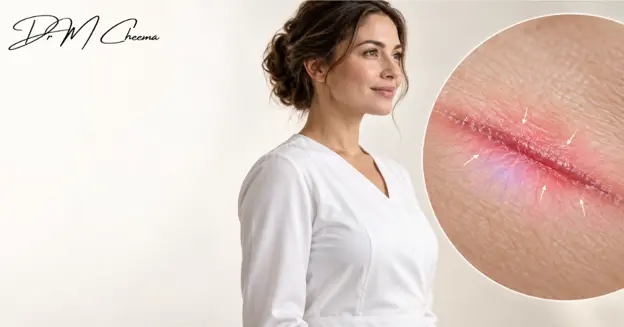
A healing scar can look significantly different from the surrounding skin during the early months. After an incision has healed, the body continues to produce and reorganise collagen within the scar. Increased blood flow to the area can contribute to a pink or red appearance.
For some people, scars can also become darker than the surrounding skin. This is particularly relevant for individuals who are more prone to pigmentation changes after skin injury. Over time, the scar usually undergoes a maturation process. The colour may gradually become less noticeable and the texture may soften.
This process cannot be rushed. Trying multiple products or treatments without discussing them with your surgeon may irritate healing skin. Your postoperative instructions should take priority.
Discuss Your Breast Reduction Options
If you are considering breast reduction and want to understand how surgery may affect your breast shape and scars, arrange a consultation with Dr. Cheema. A personalised assessment can help you understand the appropriate surgical approach and what to expect during recovery.
Can Breast Reduction Scars Become Raised?
Some scars can become raised during the healing process. A healing scar may feel firm or slightly elevated for a period before becoming softer and flatter. This can be part of normal scar maturation.
However, scars can sometimes develop more persistent thickening. Hypertrophic scars and keloid scars are examples of scars that can become more prominent than expected. If you have previously developed raised scars after surgery, injury, piercing, or other skin trauma, tell your surgeon during your consultation.
What Can Affect How Breast Reduction Scars Heal?
Several factors can influence the appearance of surgical scars.
Your Individual Skin Characteristics
Everyone heals differently. Genetics play an important role in how the body forms and remodels scar tissue.
The Surgical Technique
Different breast reduction techniques involve different incision patterns. The technique selected depends on your anatomy and the amount of reshaping required.
Wound Healing
The incision needs time to heal properly. Infection, excessive tension, wound separation, or other healing problems can influence the final appearance of a scar.
Sun Exposure
New scars can be more sensitive to sunlight. Excessive sun exposure can contribute to persistent colour changes, making scars more noticeable. Protecting healing scars from unnecessary sun exposure is therefore important.
Following Aftercare Instructions
Your surgeon will provide specific advice about wound care, supportive garments, activity, and scar management.
Following those instructions can support an uncomplicated recovery.
How Can You Care for Breast Reduction Scars?
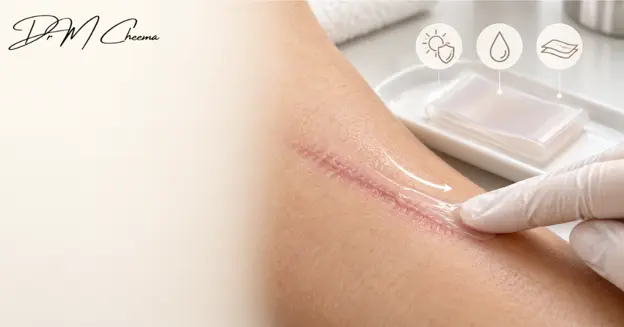
Scar care should always follow your surgeon’s instructions because the timing of different treatments depends on how your incision is healing. Once the incision has fully closed and your surgeon confirms that it is appropriate, you may be advised to use specific scar care measures.
These can include keeping the area appropriately moisturised, protecting scars from sun exposure, and using recommended scar management products. Silicone based scar products are commonly used for the management of some surgical scars, but you should ask your surgeon whether they are appropriate for your individual recovery and when you should begin using them.
Do not apply products to an open wound unless specifically instructed by your medical team. It is also important to avoid picking, scratching, or repeatedly irritating healing scars. Scar care is a gradual process. The goal is not to make the scar disappear immediately but to support healthy scar maturation.
Breast Reduction Scars: A Simple Timeline
The First Few Weeks
The incisions begin to heal. Swelling, bruising, sensitivity, tightness, and noticeable scars can be expected during early recovery.
Six Weeks
The scars may still appear pink, red, darker, firm, or slightly raised. The breasts are continuing to settle, and the final scar appearance cannot yet be judged.
Three Months
Scars often begin to look softer and less prominent. Colour changes may still be present.
Six Months
Many scars are flatter and more mature. Colour may continue to fade, although some patients still have noticeable pigmentation or firmness.
One Year
Scars are usually substantially more mature. They may be flatter, softer, and lighter, but individual differences remain.
Beyond One Year
Scar maturation can continue. Some scars become increasingly difficult to notice, while others remain more visible depending on individual healing characteristics.
Breast Reduction at Dr. Cheema
Breast reduction is available as part of Dr. Cheema’s range of breast surgery procedures in Birmingham. His practice describes the procedure as an option for patients who are struggling with discomfort or who want a more proportionate figure.
Dr. Cheema is an internationally trained Plastic, Reconstructive and Aesthetic Surgeon with experience across cosmetic and reconstructive surgery. His training includes the UK, Sweden, and Spain, and his approach emphasises personalised treatment planning and patient safety.
During your consultation, you can discuss your concerns about breast size, shape, recovery, incision placement, and scarring. You can also ask what scar pattern may be appropriate for your anatomy and what you can realistically expect during the healing process.
Plan Your Breast Reduction Journey
Every patient heals differently. If concerns about visible scars are preventing you from exploring breast reduction, speak with Dr. Cheema about your expectations, incision options, and scar care. Understanding the process before surgery can help you make an informed decision about your treatment.
Frequently Asked Questions
Are breast reduction scars permanent?
Breast reduction scars are permanent because they form where the skin has been surgically incised. However, their appearance can change significantly over time. Scars often become flatter, softer, and less noticeable as they mature. The final appearance varies from person to person.
What will my breast reduction scars look like after six weeks?
At six weeks, scars may still be pink, red, darker than the surrounding skin, firm, or slightly raised. Some swelling can also remain. Six weeks is still relatively early in the healing process, so the appearance at this stage does not represent the final result.
What will my scars look like after six months?
At six months, scars are generally more mature than they were during the early recovery period. They may have become flatter and softer, and their colour may have started to fade. Some patients may still have visible pigmentation or firmness at this stage.
Will breast reduction scars fade after one year?
Many breast reduction scars become less noticeable as they mature. At one year, scars are usually considerably more settled, but they may continue to change beyond this point. The amount of fading depends on individual skin characteristics, genetics, surgical technique, and healing.
Can breast reduction scars completely disappear?
No surgical scar can be guaranteed to disappear completely. The aim is to make scars as fine and discreet as possible while achieving a safe and appropriate surgical result. Over time, many scars become considerably less noticeable.