Losing weight can improve your health, mobility and confidence. However, some people are surprised to find that their face also changes during the process.
The cheeks may look flatter, the temples may appear hollow and lines around the mouth can become more noticeable. In some cases, the skin around the jawline and neck may also look looser.
These changes are commonly described as “Ozempic face.”
Although the term is associated with medicines such as Ozempic, it is not a formal medical diagnosis and is not unique to one medication. Similar facial changes can occur after bariatric surgery, intensive dieting, exercise-based weight loss or any other situation involving substantial or rapid fat loss.
The main cause is usually a reduction in facial fat and support beneath the skin. When this happens quickly, the face may appear more tired, gaunt or aged, even though the person feels healthier overall.
For patients who are happy with their weight but unhappy with changes to their facial appearance, personalised facial rejuvenation may help restore balance without reversing the benefits of weight loss.
At Dr Cheema’s practices in Birmingham, Manchester and London, treatment is planned around your facial anatomy, skin quality, degree of volume loss and personal goals. The aim is a refreshed, natural result rather than an overfilled appearance.
What Is Ozempic Face?
Ozempic face is an informal term used to describe facial changes that may follow significant or rapid weight loss.
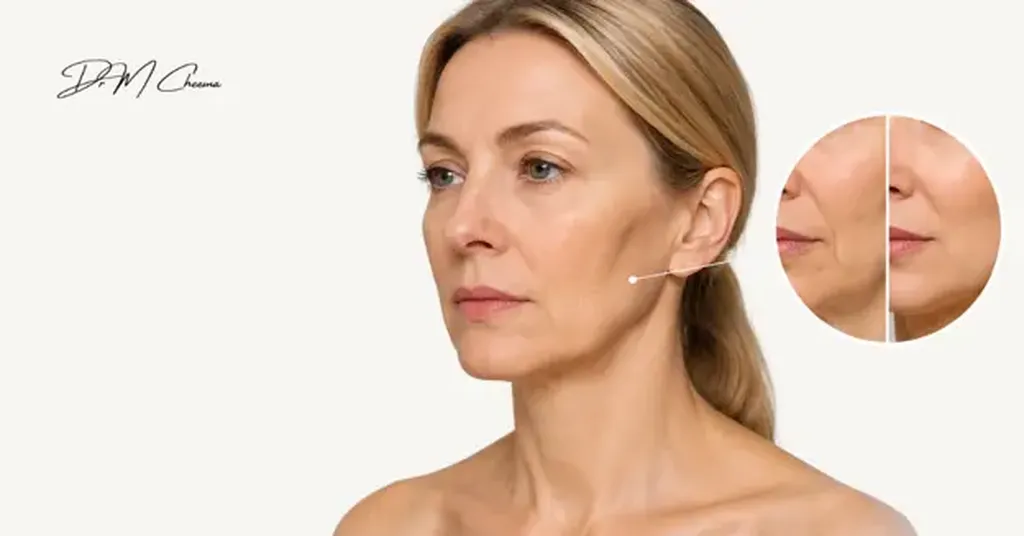
The most common changes include hollow or flattened cheeks, sunken temples, deeper lines around the mouth, increased under-eye hollowness and a less defined jawline. Some people may also notice loose skin around the cheeks, jowls or neck.
The appearance varies from person to person. One patient may mainly notice cheek hollowing, while another may be more concerned about loose skin around the lower face.
Age, genetics, the amount of weight lost, the speed of weight loss, skin elasticity and your natural facial structure all influence how noticeable these changes become.
Does Ozempic Directly Cause Facial Volume Loss?
The name can be misleading.
Ozempic contains semaglutide, a GLP-1 receptor agonist that may help some people lose a significant amount of weight. However, the facial changes commonly described as Ozempic face are generally linked to the loss of body fat rather than a unique effect on the face caused by the medication itself.
When you lose weight, your body decides where fat is removed. You cannot choose to lose fat from the abdomen while preserving all the volume in your cheeks or temples.
Facial fat provides important support and contour. When it decreases, the cheekbones, temples and other underlying structures may become more prominent. The skin may also have less support, making lines and laxity more visible.
This is why similar facial changes can occur after weight loss achieved through medication, diet, exercise or surgery.
Why Does Weight Loss Change the Face?
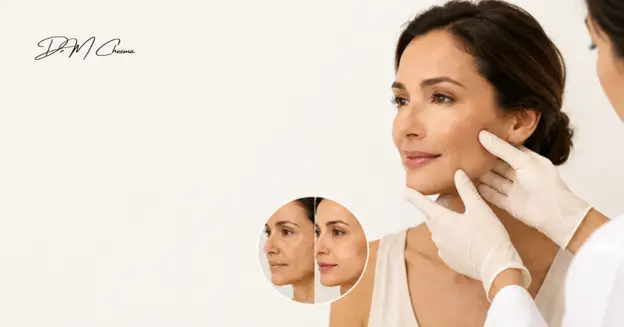
The face is supported by several layers, including skin, fat, muscle, connective tissue, ligaments and bone. These structures work together to create facial shape and maintain youthful contours.
Facial fat is particularly important in the cheeks, temples and areas around the eyes. It helps create smooth transitions between different parts of the face and supports the skin above it.
When facial fat is lost, the outer skin may have less underlying support. You can think of it like a cushion losing some of its filling. The outer material remains, but it may look less smooth or supported.
Cheek Volume Loss
The cheeks are often one of the first areas where facial volume loss becomes noticeable.
Full cheeks create a smooth transition between the lower eyelids, cheekbones and mid-face. When this volume decreases, the cheeks may look flatter or hollow, and the face may appear more angular.
Cheek volume loss can also make nasolabial folds and under-eye hollows appear deeper, even when the lines themselves have not changed significantly.
Hollow Temples
The temples can become more hollow after substantial weight loss.
This may make the sides of the upper face look narrower and cause the underlying bone structure to appear more prominent. Temple hollowing can contribute to a gaunt or tired appearance.
Because important blood vessels and structures are located in this area, temple treatment requires detailed anatomical knowledge and careful technique.
Changes Around the Eyes
Loss of volume in the upper cheeks and mid-face can make the eyes appear more deeply set.
Existing tear troughs may become more visible, and the area beneath the eyes may look darker or more tired. However, under-eye concerns can have several causes, including pigmentation, skin quality, bone structure and fat distribution.
A detailed assessment is therefore important before deciding whether volume restoration is appropriate.
More Noticeable Lines and Wrinkles
Facial volume helps support the skin and soften transitions between different facial areas.
When that support decreases, lines around the nose, mouth and eyes may appear deeper. Common concerns include nasolabial folds, marionette lines and fine lines around the lips.
Treating every line individually is not always the best approach. Restoring support in a carefully selected area, such as the cheek, may improve overall facial balance more naturally.
Jawline Changes and Jowling
Weight loss does not always create a sharper jawline.
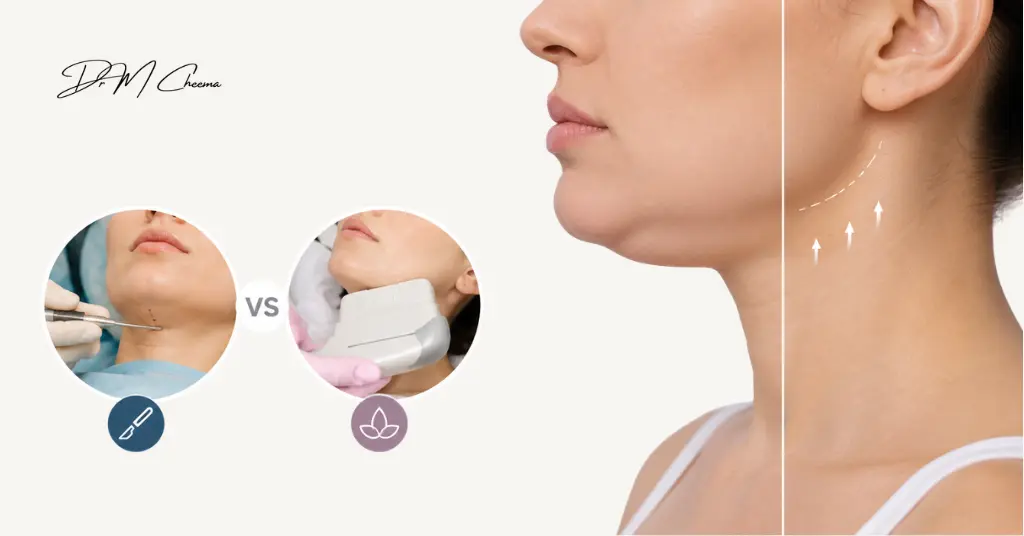
If the skin does not contract sufficiently, loose tissue may gather around the lower cheeks and jawline. This can lead to jowling and a less defined lower face.
Filler may improve definition in selected patients, but it cannot remove significant loose skin. When laxity is the main concern, a lifting or surgical approach may be more appropriate.
Why Does Ozempic Face Affect Some People More Than Others?
Two people can lose the same amount of weight and experience very different facial changes.
Age is one important factor. As we get older, the skin naturally produces less collagen and elastin, which can reduce its ability to contract after volume loss.
Genetics also influence where facial fat is stored. Some people naturally have fuller cheeks, while others have a naturally slim or angular face and may notice hollowing sooner.
The amount and speed of weight loss can also affect the result. Larger or faster changes are more likely to produce noticeable facial differences.
Skin quality matters as well. Sun exposure, smoking, ageing and genetics can all affect elasticity and collagen levels.
Is Ozempic Face Permanent?
There is no single answer.
Some people notice that their facial appearance settles once their weight becomes stable. However, lost facial fat may not naturally return if you continue to maintain your lower weight.
Regaining weight may restore some facial fullness, but the result is unpredictable. You cannot control where regained fat will be stored, and deliberately regaining unwanted weight is generally not a sensible cosmetic strategy.
For patients who are happy with their new weight, targeted facial treatment may offer a more controlled way to address specific areas of volume loss.
Should You Stop Taking Ozempic Because Your Face Has Changed?
You should not stop or change prescribed medication because of cosmetic concerns without speaking to the clinician managing your treatment.
Decisions about Ozempic, Wegovy, Mounjaro or other weight-management medicines should be based on your health and made with your prescribing clinician.
An aesthetic practitioner or plastic surgeon can assess facial changes and discuss treatment options, but they should not replace the clinician responsible for your medical care.
Can Ozempic Face Be Prevented?
It may not be possible to prevent all facial volume loss during substantial weight reduction.
However, following a medically appropriate and sustainable weight-loss plan may help avoid unnecessarily rapid changes. Good nutrition, hydration, exercise, sun protection and appropriate skincare can also support general skin health.
These measures cannot replace facial fat that has already been lost, but they may help your skin cope with changes in body weight.
If you are taking a prescription weight-loss medicine, discuss the appropriate rate of weight loss with your prescribing clinician rather than attempting to accelerate results independently.
When Should You Consider Treatment?
There is no medical requirement to treat Ozempic face. Facial volume loss after weight reduction is primarily an aesthetic concern, and treatment is entirely personal.
You may wish to consider an assessment if your face appears noticeably older, tired, hollow or gaunt, or if you are concerned about loose skin, jowling or reduced facial definition.
The most important question is not whether you fit a social-media definition of Ozempic face. It is which specific anatomical changes are affecting your appearance.
One patient may mainly need cheek volume restoration. Another may have significant skin laxity. Someone else may simply have a naturally slimmer face that does not require treatment.
Why Weight Stability Matters Before Treatment
Your facial appearance may continue to change while you are still losing weight.
If treatment is performed too early, further weight loss may alter the result and create new areas of volume loss or laxity.
For many patients, it is helpful to wait until their weight is reasonably stable before making longer-term aesthetic decisions. However, there is no universal waiting period.
The right timing depends on your weight-loss plan, general health, facial changes, skin quality and the treatment being considered.
How Can Ozempic Face Be Treated?
Treatment should be based on the cause of the concern rather than the label Ozempic face.
Some patients mainly have lost volume. Others have loose skin, reduced jawline definition, wrinkles or a combination of several changes.
Possible treatment options may include carefully placed dermal fillers, thread lifts or surgical procedures where appropriate. The most suitable approach depends on your anatomy, skin quality, degree of laxity and expectations.
A standard treatment package is rarely appropriate because facial volume loss is different for every patient.
Dermal Fillers for Facial Volume Loss
Dermal fillers may provide a non-surgical option for restoring selected areas of facial volume.
Depending on your anatomy, treatment may be considered for the cheeks, temples, chin, jawline or areas around the mouth.
The aim is not to replace every millilitre of fat that has been lost. Instead, carefully placed filler can help restore support, improve proportions and soften the appearance of hollowing.
For example, restoring selected cheek volume may improve the transition between the lower eyelid and mid-face while also reducing the appearance of deeper folds around the mouth.
Why More Filler Is Not Always Better
Patients often worry about looking overfilled, and this is a valid concern.
Using too much filler in an attempt to recreate the face before weight loss can produce an unnatural or heavy appearance. It may also make the lower face look fuller without addressing loose skin.
Natural-looking treatment focuses on proportion, structure and balance. The goal is usually to help the face look healthier, softer and better supported while preserving your individual features.
A skilled practitioner assesses the face as a whole rather than treating every visible line separately.
Restoring Cheek Volume After Weight Loss
The cheeks play a central role in facial balance.
When cheek volume decreases, the lower eyelid may appear less supported, the mid-face can look flatter and folds around the nose and mouth may become more noticeable.
Strategic cheek restoration may improve several of these concerns at the same time. However, the amount and placement of filler must be carefully planned to avoid an overfilled appearance.
The best result should restore harmony rather than make the cheeks look artificially prominent.
Treating Sunken Temples
Temple hollowing can contribute significantly to a tired or gaunt appearance.
Because the temple contains important blood vessels and other delicate structures, treatment should only be performed by an appropriately trained medical professional with detailed knowledge of facial anatomy.
The recommended approach depends on the severity of the hollowing, the surrounding facial structure and the amount of skin laxity present.
Can Fillers Improve the Jawline?
Fillers may improve jawline or chin definition in selected patients, particularly when volume loss has reduced structural support and skin laxity is mild.
However, filler cannot remove significant loose skin. If jowling or laxity is the main concern, adding more volume may not produce the desired result.
This is why a proper assessment is essential. One patient may benefit from volume restoration, another from tightening or lifting, and another from a combination of treatments.
What About Thread Lifts?
Thread lifts may be considered for selected patients with mild to moderate facial laxity who want a minimally invasive treatment.
Threads are placed beneath the skin to provide a lifting effect and improve facial contour. They may be suitable when the skin has some elasticity and the degree of laxity is limited.
Thread lifts are not a replacement for surgery when there is a significant amount of loose skin. Suitability depends on your age, skin quality, facial anatomy, weight stability and expectations.
What If There Is Significant Loose Facial Skin?
Some patients lose enough weight that loose skin becomes a greater concern than volume loss.
This may affect the lower cheeks, jawline, jowls or neck. In these cases, replacing volume alone may not provide the improvement you want.
A plastic surgeon can assess whether non-surgical treatment is appropriate or whether a surgical lifting procedure should be considered.
The key principle is to match the treatment to the anatomy rather than trying to correct every post-weight-loss concern with filler.
Can Skincare Fix Ozempic Face?
Good skincare can improve hydration, texture, pigmentation and fine lines. Daily sun protection can also help reduce further collagen damage.
However, skincare products cannot replace significant amounts of lost facial fat or remove loose skin.
If hollow cheeks or temples are caused by deeper volume loss, creams cannot restore that structure. Skincare should therefore complement, rather than replace, appropriate facial rejuvenation.
Can Drinking More Water Reverse Ozempic Face?
Adequate hydration is important for general health and skin function, but drinking more water cannot replace facial fat that has been lost.
Dehydrated skin may look dull or less supple, so maintaining good hydration is sensible. However, structural hollowing requires a different approach.
Patients should be cautious about online claims suggesting that water, supplements or topical products can completely reverse significant facial volume loss.
Can Collagen Supplements Restore Facial Volume?
Collagen supplements may support general nutrition, but they cannot selectively recreate lost cheek or temple volume.
Ozempic face involves more than collagen. It may include changes to deeper fat compartments, skin laxity and facial proportions.
A balanced diet and appropriate nutritional intake remain important during weight loss, but supplements should not be presented as a replacement for professional assessment or targeted treatment.
Will Gaining Weight Reverse Ozempic Face?
Weight gain may restore some facial fullness, but the result is unpredictable because you cannot choose where fat will return.
If you have reached a healthy weight with the support of your medical team, deliberately regaining weight purely to restore facial volume is generally not a controlled solution.
Targeted aesthetic treatment may provide a more predictable way to address specific areas of concern while preserving the health benefits of weight loss.
What Happens During an Ozempic Face Consultation?

A proper consultation involves more than deciding how much filler to use.
Mr Cheema will assess your facial structure, skin quality and the changes that occurred during weight loss. He may consider your weight history, the speed of weight loss, current weight stability, cheek projection, temple hollowing, jawline definition, jowling, neck laxity and facial symmetry.
Your medical history and current medication are also important. You should disclose whether you are taking Ozempic, Wegovy, Mounjaro or another prescribed medicine.
The aim is to understand what has actually changed and recommend treatment based on your anatomy rather than simply treating the label Ozempic face.
Why Facial Assessment Matters More Than Social-Media Trends
Social media has increased awareness of the Ozempic face, but it has also encouraged people to diagnose themselves from photographs.
Two people may believe they have the same problem but require completely different treatments.
One person may have cheek volume loss, another may have loose lower-face skin, while someone else may have temple hollowing with little laxity. Some people may simply have a naturally slimmer face that does not require treatment.
There should never be pressure to undergo cosmetic treatment because your appearance has changed after weight loss. Treatment should only be considered if the change genuinely concerns you and a suitable option is available.
How Should Natural-Looking Treatment Be Planned?
The aim of facial rejuvenation is not to make you look as though you have never lost weight.
Instead, treatment should preserve the benefits of your new body shape while restoring facial harmony where desired.
A good plan considers where volume has genuinely been lost, where structural support would improve balance, how much skin laxity is present and which features should remain unchanged.
The best result should still look like you.
How Long Do Dermal Filler Results Last?
The duration of dermal filler varies depending on the type of product, treatment area, amount used, facial movement, individual metabolism and injection technique.
Fillers are not permanent. They gradually break down over time, and maintenance treatment may eventually be appropriate.
Your practitioner should explain the expected longevity of the specific filler recommended for you.
Is Ozempic Face Treatment Safe?
All aesthetic procedures carry potential risks.
Dermal filler treatment may cause swelling, bruising, tenderness, redness, asymmetry, lumps, infection or an unsatisfactory cosmetic result. Rare but serious vascular complications can also occur if filler enters or compresses a blood vessel.
This is why treatment should be performed by an appropriately qualified medical professional with detailed knowledge of facial anatomy.
Does Everyone with Ozempic Face Need Treatment?
No.
Ozempic face is not an illness, and there is no reason to treat facial changes unless they bother you.
Some people prefer their slimmer facial appearance after weight loss. Others feel that more defined cheekbones suit them.
A responsible consultation should include the possibility that no treatment is necessary.
Do You Need to Finish Losing Weight Before Treatment?
For many patients, it is helpful to be close to a stable weight before undergoing significant facial restoration.
If further weight loss is expected, facial contours may continue to change. However, the ideal timing depends on your weight-loss plan, general health, current facial concerns and the treatment being considered.
Your prescribing clinician should continue to manage your weight-loss medication and medical care, while your aesthetic practitioner focuses on facial assessment and treatment options.
Ozempic Face and Natural Facial Ageing
Rapid weight loss and natural ageing can create similar facial changes.
As we age, facial fat distribution changes and the skin gradually loses elasticity. This can lead to flatter cheeks, hollow temples, deeper folds, jowls and loose neck skin.
Rapid weight loss may make these changes appear more noticeable over a shorter period. Patients who had already experienced age-related volume loss may notice a particularly significant difference after losing weight.
Treatment should therefore consider both weight-loss-related changes and natural ageing.
Why Choose a Plastic Surgeon for Facial Volume Restoration?

Facial rejuvenation requires an understanding of more than injections.
A plastic surgeon is trained to assess the relationship between the skin, fat compartments, muscles, ligaments, blood vessels, nerves and bone structure.
This broader perspective can help determine whether your concern is best addressed through volume restoration, lifting, contouring or another approach.
At Dr Cheema’s practice, facial contouring is tailored to the individual, with the aim of restoring balance while maintaining a natural appearance.
Restore Facial Volume Without Reversing Your Weight Loss
Successful weight loss can be an important achievement. If you feel healthier at your new weight, you should not feel that you need to reverse that progress simply because your face has changed.
Ozempic face treatment focuses on the areas where facial volume or support has been lost while respecting your overall appearance.
Some patients may benefit from subtle cheek restoration. Others may need treatment across several areas, while patients with significant skin laxity may require a different approach altogether.
There is no universal Ozempic face package. The most natural results come from understanding what has changed and treating only what needs correction.
Restore Facial Volume & Definition
Concerned about hollow cheeks, sunken temples or loose skin after weight loss? Arrange a personalised facial assessment with Dr Cheema in Birmingham, Manchester or London to explore the options best suited to you.
Frequently Asked Questions
What is Ozempic face?
Ozempic face is an informal term describing facial volume loss, hollowing, deeper lines or loose skin that may become noticeable after rapid or substantial weight loss. It is not an official medical diagnosis.
Is Ozempic face caused directly by Ozempic?
Facial changes are primarily associated with the loss of facial fat during significant weight reduction rather than being unique to Ozempic. Similar changes can occur after dieting, exercise, bariatric surgery or other weight-loss treatments.
Can dermal fillers treat Ozempic face?
Dermal fillers may restore volume in selected areas such as the cheeks, temples, chin or jawline. Suitability depends on your facial anatomy, skin quality and degree of volume loss.
Does Ozempic face go away naturally?
Some changes may settle once your weight becomes stable, but lost facial volume may persist if you maintain your lower weight. The outcome varies between individuals.
Should I stop taking Ozempic if my face looks different?
Do not stop or change prescribed medication because of cosmetic concerns without speaking to the healthcare professional managing your treatment.