

Breast implants can change the appearance of the breasts, but like any medical device, they can sometimes cause complications. One of the recognised long-term complications is capsular contracture, a condition in which the scar tissue surrounding a breast implant becomes unusually tight and firm. This can make the breast feel harder than normal, alter its shape, and sometimes cause pain or discomfort.
At Dr Cheema, patients can learn more about breast surgery and revision procedures through the practice’s website. This guide explains what capsular contracture is, why it develops, how it is diagnosed, and when breast implant replacement may be considered.
What Is Capsular Contracture?
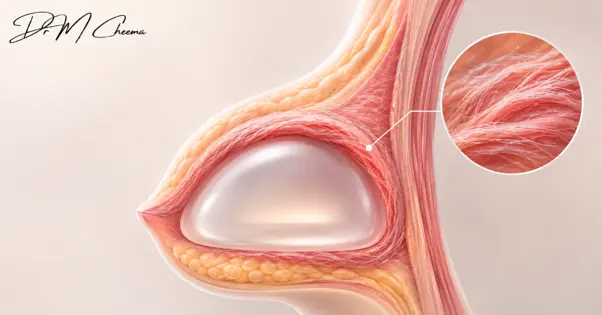
Capsular contracture occurs when the scar tissue that naturally forms around a breast implant becomes excessively tight or contracts around it.
After breast implant surgery, the body creates a thin layer of fibrous tissue called a capsule around each implant. This is a normal part of the healing process and helps keep the implant in position.
In some people, however, the capsule gradually thickens, tightens, or hardens. The resulting pressure can affect how the breast feels and looks. Depending on the severity, the breast may become firm, appear unusually round or elevated, or develop visible distortion.
What Causes Capsular Contracture?
There is no single confirmed cause of capsular contracture in every patient. Research suggests that several factors may contribute to the development of excessive scar tissue around breast implants.
1. Inflammation During Healing
The body naturally responds to an implant by forming a protective capsule. If the surrounding tissues experience prolonged inflammation, the capsule may become thicker or tighter than expected.
2. Infection
An infection following breast implant surgery may increase the risk of capsular contracture. In some cases, bacteria can contribute to persistent inflammation around the implant.
3. Bleeding or Fluid Collection
A collection of blood, known as a haematoma, or fluid around the implant, called a seroma, may contribute to inflammation and increase the risk of complications.
4. Previous Radiotherapy
Patients who have undergone radiotherapy to the chest, particularly following breast cancer treatment, may have an increased risk of capsular contracture. Radiation can affect tissue healing and increase fibrosis around an implant.
5. Individual Healing Differences
People heal differently. Factors such as previous breast surgery, tissue characteristics, and other medical circumstances can influence the way scar tissue develops.

What Are the Signs and Symptoms of Capsular Contracture?
Capsular contracture can cause gradual changes in breast firmness, shape, position, and comfort. Symptoms vary according to the severity of the condition.
Increasing Breast Firmness
One of the most recognisable signs is a breast that feels firmer than it did after the initial healing period.
Mild firmness may be difficult to distinguish from normal post-operative changes. However, increasing hardness or a noticeable difference between the breasts warrants assessment.
Changes in Breast Shape
As the capsule tightens, it can compress the implant and alter the breast’s appearance.
The affected breast may look unusually round, elevated, distorted, or less natural than before. The implant may also appear to sit higher on the chest.
Breast Asymmetry
If contracture affects only one breast, the breasts may become increasingly uneven in shape, position, or firmness.
Although some natural asymmetry is common, a new or progressive difference following implant surgery should be checked.
Pain or Tenderness
Some patients experience tightness, aching, tenderness, or pain. These symptoms are more commonly associated with severe contracture, although discomfort can occur for other reasons as well.
A Feeling of Tightness
The breast may feel restricted or under pressure as the scar tissue contracts around the implant. Some people notice that the sensation becomes more apparent over time.
Changes That Develop Years Later
Capsular contracture is not limited to the first few months after surgery. It can develop years after breast augmentation or reconstruction.
Concerned About Changes in Your Breast Implants?
If your breasts have become firmer, painful, or noticeably different in shape, it may be time to seek professional advice. Understanding the cause of these changes can help you explore suitable treatment options, including monitoring, implant revision, or replacement where appropriate. Visit Dr Cheema’s website to learn more about available surgical services.
Understanding the Four Baker Grades of Capsular Contracture
Surgeons commonly use the Baker grading system to describe the severity of capsular contracture. It classifies the condition into four grades according to breast firmness, appearance, and pain.
Grade I: Normal Breast Appearance and Feel
Grade I represents a normal result. The breast feels soft and looks natural, with no clinically significant contracture.
A capsule is still present around the implant, but it does not noticeably affect the breast’s appearance or texture.
Treatment: No specific treatment for capsular contracture is required. Routine implant follow-up and appropriate monitoring remain important.
Grade II: Mild Firmness
At Grade II, the breast feels slightly firmer than expected but generally retains a normal appearance.
There may be a subtle difference in texture, although visible distortion is usually absent.
Some patients may not find the change particularly troublesome, while others may notice that the breast no longer feels as soft as before.
Treatment: Observation may be appropriate if there are no significant symptoms or changes in appearance. A clinician can assess whether further investigation or follow-up is needed.
Grade III: Firmness With Visible Distortion
Grade III capsular contracture is characterised by a firm breast and an abnormal appearance.
The breast may look unusually round, elevated, or distorted. The implant may appear to sit higher than expected, and asymmetry can become more noticeable.
Pain is not essential for a Grade III diagnosis, so the absence of discomfort does not rule out clinically significant contracture.
Treatment: A plastic surgeon may recommend revision surgery if the distortion is significant or the patient is experiencing considerable concern. The procedure may involve releasing or removing the capsule, with or without replacing the implant.
Grade IV: Severe Firmness, Pain, and Distortion
Grade IV is the most severe category. The breast is hard, painful, and visibly abnormal.
The tight capsule can place considerable pressure on the implant, causing discomfort and marked changes in shape or position.
Treatment: Surgical correction is commonly considered for Grade IV capsular contracture. Depending on the clinical findings and the patient’s preferences, this may involve capsulectomy, implant removal, implant replacement, or a combination of procedures.
The Baker scale helps describe the condition, but it does not replace a full clinical assessment. The appropriate treatment depends on the symptoms, implant condition, medical history, and individual goals.
How Is Capsular Contracture Diagnosed?
If you notice changes in your breasts after implant surgery, a medical assessment can help establish whether capsular contracture is responsible.
Medical History and Examination
Your clinician will ask about your original surgery, when the symptoms began, and whether the changes have progressed.
The breasts will be examined for firmness, tenderness, shape, symmetry, and implant position. Your clinician may also ask about previous infections, other breast procedures, and any history of radiotherapy.
Ultrasound or MRI
Imaging may be recommended if there is uncertainty about the diagnosis or concern about another implant complication.
An ultrasound can help identify fluid collections and assess some implant-related changes. MRI may be recommended when further information about implant integrity or surrounding tissues is needed.
Excluding Other Conditions
Capsular contracture can resemble other breast implant complications. A clinician may need to investigate implant rupture, infection, a fluid collection, or another breast abnormality before recommending treatment.
When Do Breast Implants Need Replacing?
Capsular contracture does not automatically mean that breast implants must be replaced. The decision depends on the severity of the condition, the implant’s integrity, the symptoms, and the patient’s preferences.
Severe Capsular Contracture
Grades III and IV may require surgery when the breast becomes significantly firm, distorted, or painful.
During revision surgery, the surgeon may release the contracted capsule or remove part or all of it. The existing implant may be replaced if this is appropriate.
Implant Rupture or Damage
If investigations identify a ruptured implant, removal or replacement may be recommended. The approach depends on whether the implant contains saline or silicone, the extent of the rupture, and the surrounding tissue findings.
Some silicone implant ruptures may not produce obvious symptoms, so an examination and suitable imaging can be important when rupture is suspected.
Persistent Discomfort
Ongoing pain, tightness, or tenderness may justify further assessment even when the visible changes appear limited.
If capsular contracture is confirmed and symptoms significantly affect daily life, revision surgery may be discussed.
Significant Changes in Appearance
Some patients seek revision because the breast shape, position, or symmetry has changed noticeably.
If the changes are caused by capsular contracture, surgical treatment may help improve the contour. However, the final result depends on the condition of the tissues, the implant, and the selected procedure.
Personal Preferences
Some patients choose to have implants removed rather than replaced. Others prefer to maintain their breast volume through implant exchange or discuss alternative reconstruction options.
These decisions should be made after considering the benefits, limitations, recovery, and potential risks of each approach.
Take the Next Step Towards Understanding Your Breast Implant Options
Capsular contracture can range from mild firmness to severe tightening that causes pain and visible changes in breast shape. While mild cases may only require monitoring, more advanced contracture can warrant revision surgery, capsule removal, or implant replacement. The right approach depends on your symptoms, implant condition, medical history, and personal preferences.
If you are concerned about changes following breast implant surgery, seeking professional advice is an important first step. Dr Cheema’s website provides information about his surgical practice and services in Birmingham. Explore the available information and enquire about an assessment to discuss your concerns, understand your treatment options, and make an informed decision about your next steps.
Discuss Your Breast Implant Concerns with Dr Cheema
If you have noticed increasing firmness, discomfort, or changes in breast shape following implant surgery, a professional assessment can help you understand the possible cause and appropriate next steps.
Frequently Asked Questions
What Is the First Sign of Capsular Contracture?
Increasing firmness is often one of the first noticeable signs. You may also notice tightness or a subtle change in the shape or position of one breast. A new change should be assessed by a healthcare professional.
Can Capsular Contracture Occur Years After Breast Implant Surgery?
Yes. Although it can develop during the first months or years after surgery, capsular contracture can also appear much later. New symptoms should not be dismissed simply because your implants are several years old.
Is Capsular Contracture Dangerous?
Capsular contracture is a recognised implant complication and is not usually a medical emergency. However, severe cases can cause significant pain and distortion. New swelling, a lump, or other unexplained changes require assessment because other conditions may need to be excluded.
Does Grade II Capsular Contracture Need Surgery?
Not necessarily. Grade II usually involves mild firmness without obvious distortion. Monitoring may be appropriate if symptoms are limited, but your clinician should assess the breast and discuss whether further investigation is needed.
Does Grade III Capsular Contracture Always Require Implant Replacement?
No. Grade III often warrants discussion of treatment because it causes firmness and visible distortion, but the appropriate procedure varies. Surgery may involve releasing or removing the capsule, with or without implant replacement.