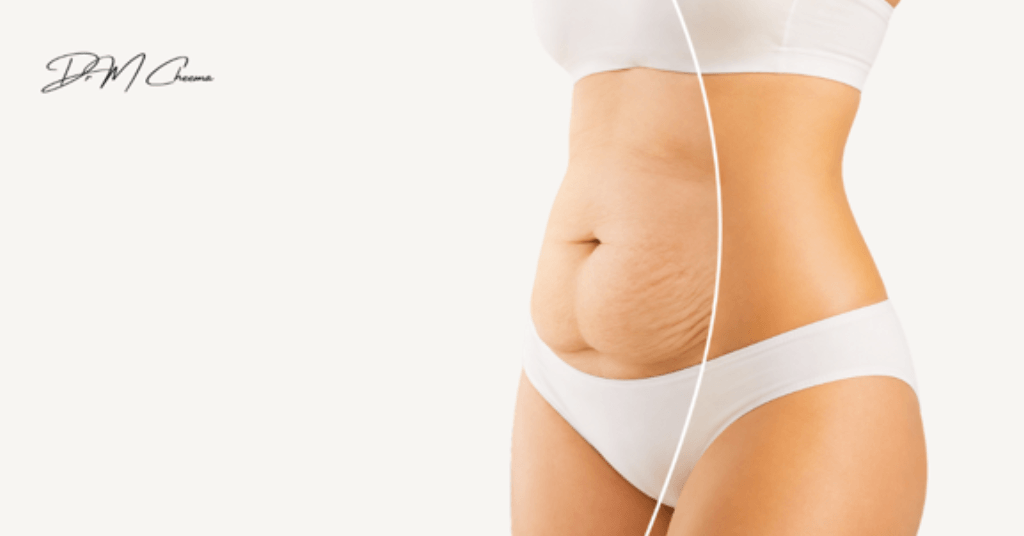
Reaching a significant weight loss milestone, whether through lifestyle changes, bariatric surgery, or a combination of both, is something to be genuinely proud of. For many patients, however, the transformation still feels incomplete. Excess loose skin left behind after substantial weight loss can cause physical discomfort, skin irritation, and disconnect between how you look and how far you have truly come.
Body contouring surgery after weight loss is where the final chapter begins. As a Plastic, Reconstructive and Aesthetic Surgeon with over 20 years of experience, Dr. Cheema works with patients at his Birmingham practice who are ready to complete their journey, removing redundant skin and reshaping the body to reflect the remarkable effort they have already invested in themselves.
Why Does Loose Skin Occur After Weight Loss?
Skin is a remarkable organ, but it has limits. When the body carries excess weight for an extended period, the skin stretches to accommodate the increased volume. Over time, the collagen and elastin fibres within the skin become damaged and lose their ability to contract. When the underlying fat is lost particularly rapidly the skin cannot spring back to fit the new, smaller frame beneath it.
Several factors influence how much loose skin a person develops:
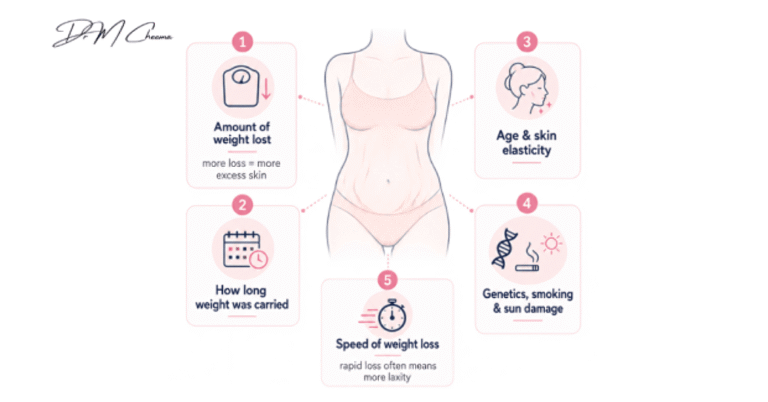
- The total amount of weight lost (the greater the loss, the more pronounced the excess skin)
- How long excess weight was carried
- Age at the time of weight loss (skin elasticity naturally declines with age)
- Genetics, smoking history, and sun damage
- Speed of weight loss rapid loss after bariatric surgery often results in more skin laxity
No cream, exercise programme, or non-surgical device can tighten truly redundant skin. Surgical body contouring remains the only reliable solution for removing and repositioning excess skin once the underlying tissues have been significantly overstretched.
Common Body Contouring Procedures After Weight Loss
Body contouring after major weight loss is rarely a single operation. Depending on the areas affected and the degree of skin laxity, one or a combination of procedures may be recommended. Below are the most commonly performed surgeries in this context.
Tummy Tuck (Abdominoplasty)
Removes excess skin and fat from the abdominal area while tightening weakened abdominal muscles, creating a flatter, firmer midsection.
Body Lift (Belt Lipectomy)
A circumferential procedure that addresses laxity across the abdomen, flanks, lower back, and outer thighs in a single operation.
Arm Lift (Brachioplasty)
Removes the characteristic “bat wing” skin that hangs from the upper arms, restoring a more toned and defined arm contour.
Thigh Lift
Tightens loose skin along the inner or outer thighs, improving shape and reducing chafing that many patients experience after weight loss.
Breast Lift (Mastopexy)
Raises and reshapes sagging breasts that have lost volume and position following significant weight loss, often combined with implants if desired.
Liposuction
Used alongside skin-removal procedures to refine contours and remove residual pockets of fat that persist despite weight loss efforts.
Am I a Good Candidate for Body Contouring?
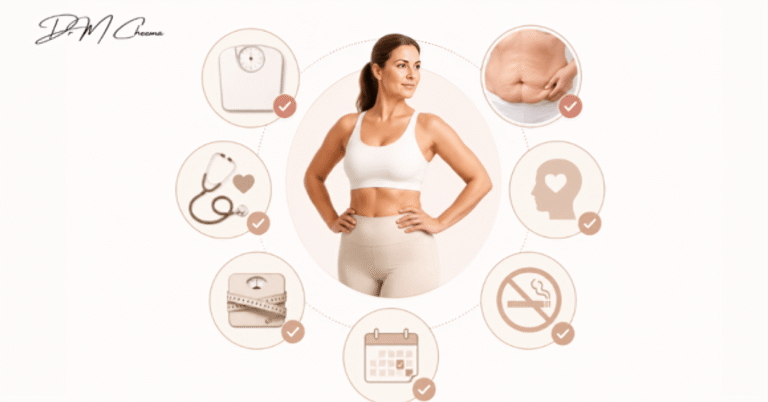
The best candidates for post-weight-loss body contouring are individuals who have:
- Achieved a stable, healthy weight for a minimum of 6–12 months
- Significant loose or hanging skin causing physical symptoms (rashes, hygiene difficulties, restricted movement) or significant psychological distress
- Good overall health, with any obesity-related conditions well managed
- Realistic expectations about what surgery can and cannot achieve
- A commitment to maintaining their weight long-term after surgery
- Non-smoking status (or willingness to stop well in advance of surgery)
Weight stability before surgery is essential. Operating on a body that is still losing weight risks creating new redundancy over time, which may compromise your results and potentially require revision surgery.
Ready to See What’s Possible?
Book a private consultation with Mr. Cheema at his Birmingham clinic to discuss your body contouring goals and explore the right procedure for you.
What to Expect: The Surgical Journey
Initial Consultation
At your first appointment, we review your full medical and weight-loss history, discuss your areas of concern, and establish which procedures best address your needs. This is a collaborative conversation, your priorities guide the surgical plan, not a one-size-fits-all approach.
Procedure Planning and Staging
Depending on the number of areas to be treated, procedures may be performed in a single session or staged over two or more operations. Combining procedures reduces the number of anaesthetics and recovery periods, but patient safety always takes precedence when planning the scope of any single operating session.
Surgery and Anaesthesia
Body contouring procedures are performed under general anaesthesia. Operating times vary from one to six hours or more, depending on the complexity and number of areas addressed. All surgery is carried out in a fully accredited, regulated facility.
Recovery and Aftercare
Most patients require an overnight stay of one to two nights following significant body contouring work. Compression garments are worn for several weeks to support healing and reduce swelling. Most people return to light activities within two to four weeks and resume full activity by six to eight weeks, though this varies by procedure. You will be supported throughout your recovery with scheduled follow-up appointments to monitor your progress and healing.
Understanding Scars in Body Contouring
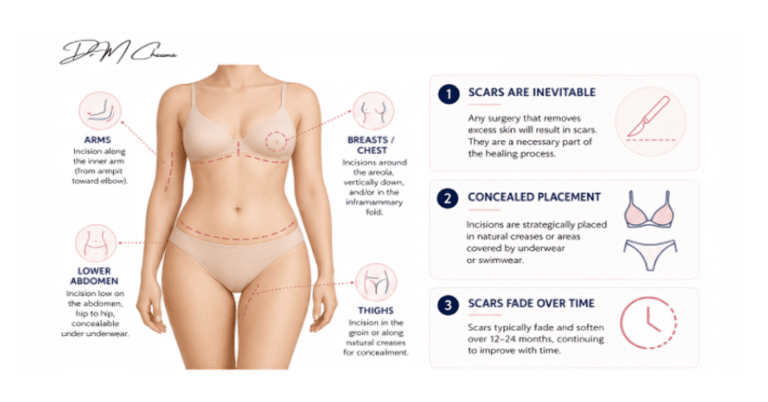
Any procedure that removes excess skin will result in scars. This is a fundamental trade-off that every patient must carefully consider before proceeding. The goal is always to place incisions in locations that can be concealed beneath clothing and swimwear, and to minimise their appearance through meticulous surgical technique and dedicated scar management afterwards.
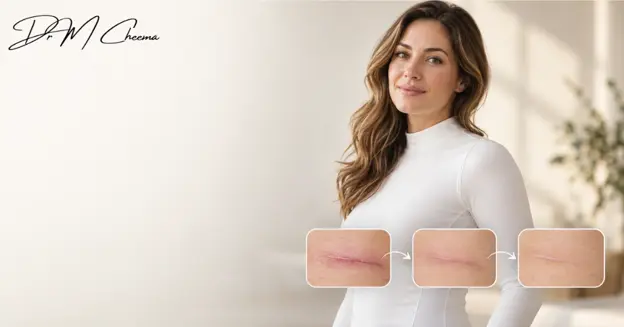
Scars will fade considerably over 12 to 24 months. With proper care including silicone gel or sheeting, sun protection, and massage most scars become pale and flat over time. Scar management support is an integral part of the aftercare we provide at our practice.
For many patients, the scars are a completely acceptable and even welcome trade, a mark of their transformation rather than an obstacle to it.
Psychological Impact of Body Contouring
The benefits of body contouring extend well beyond the physical. Research consistently demonstrates that patients who undergo body contouring following major weight loss report substantial improvements in body image, self-confidence, and overall quality of life. Many describe being able to dress how they want, exercise without skin discomfort, and engage in relationships and social situations with a freedom they had not experienced for years or ever.
That said, it is important to approach surgery with balanced expectations. Body contouring is a complement to your achievement, not a definition of your worth. We encourage all patients to be in a positive and stable emotional state before proceeding with any elective procedure.
Begin Your Body Contouring Journey Today
Call our Birmingham clinic or submit an enquiry online. Mr. Cheema’s team will respond promptly to arrange your private consultation.
Why Choose Dr. Cheema?
Mr. Cheema has been a Fellow of the Royal College of Surgeons in Plastic Surgery (FRCS Plast) with over two decades of experience in plastic, reconstructive, and aesthetic surgery. Trained in the UK, Sweden, and Spain, he brings an internationally informed perspective to every procedure, combining technical precision with a patient-centred approach that prioritises safety, natural results, and thorough aftercare.
His practice at the House of Health in Birmingham offers a personalised, discreet environment where every patient receives the time and attention their journey deserves.
Frequently Asked Questions
How long do I need to wait after weight loss before having body contouring surgery?
Most surgeons, including Mr. Cheema, recommend that your weight has been stable for at least 6 to 12 months before proceeding with body contouring surgery. This ensures that your body has fully adjusted to your new weight, reducing the risk that further weight changes will affect your surgical results.
Will body contouring surgery leave visible scars?
Yes, all surgery that removes skin will produce scars. Mr. Cheema takes great care to position incisions in areas that can be concealed by underwear or swimwear and uses advanced surgical technique to minimise scar width. Scars typically mature and fade significantly over 12–24 months. A structured scar management programme, including silicone products and sun protection advice, is provided as part of your aftercare to optimise the final appearance of your scars.
How long is the recovery after a tummy tuck or body lift?
Following a tummy tuck, most patients are mobile within a day or two and return to light, sedentary work within two to four weeks. A full body lift, which is a more extensive procedure, typically requires a slightly longer recovery of four to six weeks before returning to office-based work, with full activity including exercise resuming at around eight to twelve weeks. Mr. Cheema will provide you with a tailored recovery plan and will monitor your progress closely throughout the healing process.
What is the difference between a tummy tuck and a body lift?
A tummy tuck (abdominoplasty) addresses the front of the abdomen removing excess skin and fat from the lower abdomen and tightening the abdominal muscles. A body lift (or belt lipectomy) is a more extensive procedure that works circumferentially around the entire torso, also lifting and tightening the flanks, lower back, and outer thighs in a single operation. Patients with loose skin extending around their entire midsection after large weight losses are often better served by a body lift, while those whose concerns are limited to the front of the abdomen may be well suited to a tummy tuck alone.
Are the results of body contouring surgery permanent?
The skin that is removed during body contouring surgery does not return. However, significant weight fluctuations after surgery including both weight gain and further weight loss can affect the results by stretching the remaining skin or creating new laxity. For this reason, it is important to be at a stable, sustainable weight before undergoing surgery and to commit to maintaining that weight long-term. Ageing will also cause some degree of natural skin laxity over time, as it does in all people.